An infertility assessment does not automatically end the possibility of natural pregnancy, and ICSI is not a universal replacement for trying without treatment. The right plan depends on age, ovarian reserve, ovulation, sperm findings, tubal function and how long you have been trying; by the end, you can identify when to continue naturally, when to move to treatment and what questions to take to a Mumbai fertility clinic.
Key takeaways
- Set a review date after a defined number of timed-intercourse cycles.
- Consider ICSI when severe sperm problems limit fertilisation with standard methods.
- Check ovulation, ovarian reserve, tubal patency and semen results together.
- Use pregnancy testing and follow-up visits to adjust the treatment plan.
When is trying naturally still reasonable after an infertility assessment?
Further natural pregnancy attempts are reasonable after an infertility assessment when ovulation is regular, ovarian reserve is reassuring, at least one tube is open and functioning, and semen analysis shows usable sperm. Agree on a defined number of timed-intercourse cycles after counselling rather than continuing without a review date.
Evaluation is usually advised after 12 months of regular unprotected intercourse if the woman is under 35, or after six months if she is 35 or older. Seek assessment sooner for irregular or absent ovulation, suspected tubal disease, severe endometriosis or significant male-factor concerns. Examine both partners: infertility is not automatically a woman’s problem.
Age and the duration of trying reduce the time available for natural attempts. Very irregular cycles, diminished ovarian reserve, advancing age, prolonged infertility or markedly abnormal sperm count, movement or morphology make delaying fertility care less attractive.
| Situation | Natural attempts | Why timing matters |
|---|---|---|
| Regular ovulation, reassuring reserve, one open tube and usable sperm | A defined period of timed intercourse may be reasonable | Set a review date |
| Diminished reserve, advancing age or prolonged infertility | Keep the natural-attempt window short | Egg number and time are limited |
| Very irregular cycles, tubal damage or markedly abnormal semen results | Discuss treatment rather than relying on intercourse alone | The main obstacle may not resolve naturally |
A later plan can include conventional IVF or ICSI if the agreed window ends or results worsen. Reassess sooner if cycles change, pain suggests endometriosis, or semen findings are severe.
Which sperm findings make ICSI treatment worth considering?
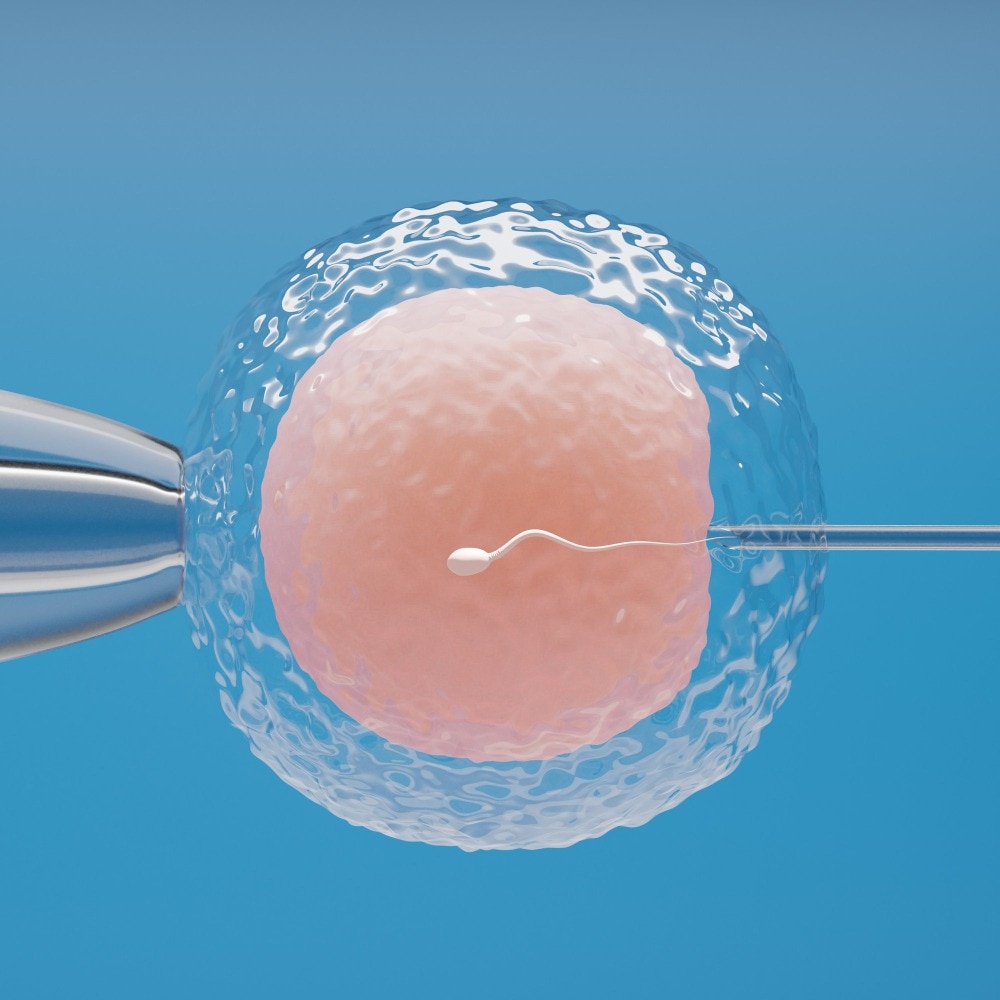
ICSI treatment is worth discussing when sperm have difficulty reaching or entering the egg. Findings that support it include a very low sperm count, poor progressive movement, severe abnormal morphology, sperm obtained surgically from the epididymis or testicle, or a previous IVF cycle with failed or very low fertilisation.
| Feature | Conventional IVF | ICSI |
|---|---|---|
| What it changes | Eggs and sperm are placed together in the laboratory | One sperm is injected into one mature egg |
| Where it fits | Part of a cycle involving ovarian stimulation, egg retrieval, fertilisation, embryo culture and embryo transfer | The same IVF cycle, with a different fertilisation method |
| When it may add value | Sperm and egg factors are suitable for sperm-egg contact | Sperm cannot reliably reach or enter the egg, or prior fertilisation was unsuccessful |
| What it cannot fix | Poor egg quality, embryo chromosome abnormalities or uterine problems | The same problems; injection does not guarantee a usable embryo or live birth |
ICSI can improve the chance that an injected mature egg will fertilise in an appropriate case, but a fertilisation rate is not a live-birth probability. It also involves extra laboratory manipulation and cost, so ask which specific semen finding or previous result justifies it.
A tubal blockage alone supports IVF because embryo transfer bypasses the tubes; it does not automatically make ICSI superior.
How do tubal and female factors change the choice between natural conception and ICSI?
A blocked tube changes the route to pregnancy, not necessarily the fertilisation method. ICSI treatment may fail to address the main problem when infertility arises from the female reproductive tract.
1. Ovarian reserve reflects the remaining egg supply. Testing with anti-Müllerian hormone, antral follicle count and sometimes day-2-to-4 FSH helps estimate response to stimulation. ICSI does not restore egg numbers.
2. Ovulation determines whether an egg is released. Irregular or absent ovulation needs treatment directed at its cause; ICSI does not correct an ovulation disorder.
3. Egg quality declines with age and affects embryo development and chromosome status. ICSI cannot reverse age-related decline or correct chromosomal abnormalities in embryos.
4. Uterine anatomy affects implantation. Pelvic ultrasound can identify fibroids, polyps, adenomyosis or uterine-shape concerns, but ICSI cannot repair the uterus.
5. Tubal problems need separate evaluation. Bilateral tubal occlusion generally prevents sperm and egg meeting through intercourse, while one open, functioning tube can still permit natural pregnancy. A blockage supports considering IVF because embryo transfer bypasses the tubes, not because it automatically calls for ICSI.
A hydrosalpinx, a fluid-filled damaged tube, can reduce implantation and raise ectopic-pregnancy concerns, so treatment may be needed before transfer.
6. Assessment combines ovulation review, ovarian-reserve testing when appropriate, pelvic ultrasound, semen analysis and tubal evaluation with hysterosalpingography or laparoscopy when indicated. These results show whether timed intercourse, IVF or ICSI addresses the actual barrier.
What happens from the first Mumbai consultation to pregnancy testing?
Your first Mumbai consultation should turn test results into a sequence, not a default choice of ICSI treatment. Review age, previous pregnancies or treatment, cycle history, medical conditions and both partners’ results, including semen analysis, ovulation, ovarian reserve and tubal findings.
A typical cycle uses ovarian stimulation, ultrasound and hormone monitoring, followed by egg retrieval. Collect fresh sperm or sperm retrieved surgically when needed; the laboratory uses conventional IVF or ICSI, followed by embryo culture and fresh or frozen embryo transfer.
Pregnancy testing occurs at the clinic’s stated interval, so ask for the exact day and follow-up plan.
Not every cycle reaches transfer. No mature eggs, failed fertilisation or no transferable embryo can stop treatment before transfer, so ask what happens next.
- Ask whether the centre is registered under India’s Assisted Reproductive Technology framework.
- Ask who performs ICSI, how sperm and embryos are identified and tracked, and how the laboratory is overseen.
- Ask about single-embryo transfer and the plan if fertilisation fails.
- Compare clinical-pregnancy and live-birth results, separated by age, diagnosis, and fresh versus frozen transfer.
| Route | Main role | When to discuss |
|---|---|---|
| Natural attempts | Timed conception | A defined window for natural pregnancy in Mumbai |
| Conventional IVF | Laboratory fertilisation | Eggs and sperm have a reasonable fertilisation chance |
| ICSI treatment | Targeted fertilisation step | A documented sperm or prior-fertilisation indication |
A consultation with Dr Bhavini Shah Balakrishnan can connect those findings to a defined period of natural attempts, conventional IVF or ICSI.
Related service
ICSI Treatment ICSI (Intracytoplasmic Sperm Injection) is a form of assisted reproductive technology (ART) used in cases of male infertility. View service → |
How can ICSI and later natural pregnancy attempts fit into one plan?
Choosing ICSI does not permanently rule out natural pregnancy. Treat the decision as a sequence with review points: agree on a safe number of natural cycles, then move to ICSI when the agreed time, test result or age-related concern makes further delay unattractive.
| Option | What it means | When it applies |
|---|---|---|
| Natural attempts | Timed intercourse while monitoring ovulation | Ovulation, sperm and at least one functioning tube are reassuring |
| Conventional IVF | Eggs are retrieved, then fertilised with sperm in the laboratory | Tubal disease or other factors require IVF, but fertilisation is reasonably expected |
| ICSI within IVF | One sperm is injected into each mature egg | Very low count, poor movement, severe morphology, surgically retrieved sperm or previous fertilisation failure |
After an ICSI or IVF birth, spontaneous natural pregnancy remains possible if ovulation occurs, sperm production is adequate and at least one functional route through the reproductive tract remains. A successful treatment cycle does not prove natural conception is impossible, while a previous natural pregnancy does not guarantee future ease.
Seek fertility care after six months of trying at age 35 or older, after 12 months under 35, or sooner with irregular cycles, known tubal damage or major semen abnormalities. This applies when planning ICSI treatment and natural pregnancy in Mumbai or elsewhere.
Ask:
- What specifically is the reason for ICSI?
- How long is a safe natural-attempt window?
- Which result triggers treatment?
- Will single-embryo transfer reduce multiple-pregnancy risk?
Frequently asked questions
When is trying naturally still reasonable after an infertility assessment?
Further attempts can be reasonable when ovulation is regular, ovarian reserve is reassuring, at least one tube is open and functioning, and semen analysis shows usable sperm. Agree on a defined number of timed-intercourse cycles and a review date.
Which sperm findings make ICSI treatment worth considering?
ICSI may be considered when sperm concentration, movement or shape is severely impaired, when sperm cannot reach the egg during standard IVF, or after failed fertilisation. The decision depends on the complete semen analysis and treatment history.
How do tubal and female factors change the choice between natural conception and ICSI?
Blocked or severely damaged tubes reduce the chance of natural conception because sperm and egg cannot meet. Ovulation disorders, reduced ovarian reserve, endometriosis and age also affect timing and treatment selection.
What happens from the first Mumbai consultation to pregnancy testing?
The process usually includes a medical history, examination, ovarian and uterine assessment, semen analysis, tubal evaluation when appropriate, treatment planning, ovarian stimulation, egg retrieval, sperm injection, embryo transfer and a scheduled pregnancy test.
How can ICSI and later natural pregnancy attempts fit into one plan?
Your clinician can set treatment goals, define when to attempt naturally, review test results after each stage and agree on when to move from timed intercourse to ICSI or reassess the plan.
Keywords