High blood pressure during pregnancy requires timely evaluation because it can affect the mother, placenta, and baby. Some women enter pregnancy with chronic hypertension, while others develop gestational hypertension or pre-eclampsia after pregnancy has begun.
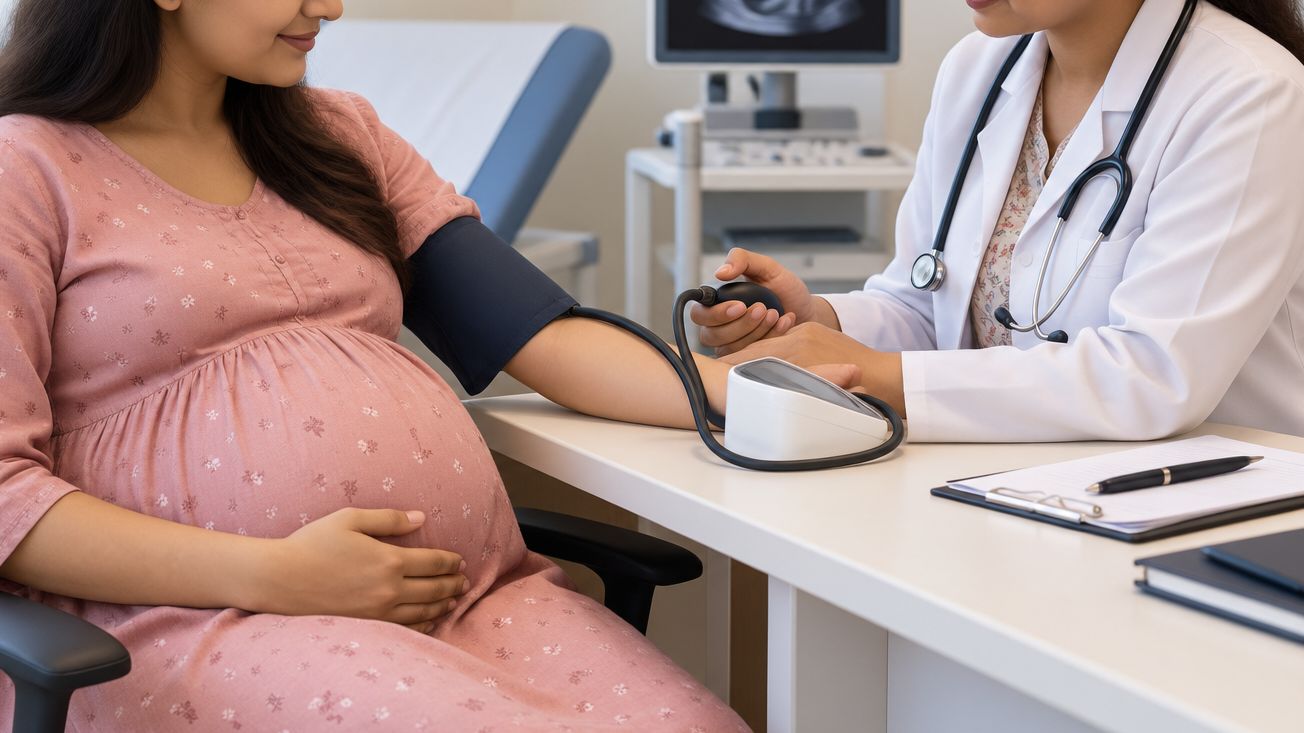
Hypertension in pregnancy care should include accurate measurement, assessment for associated complications, ongoing monitoring, and a clear plan for delivery. It should never depend on a single blood-pressure reading taken without appropriate confirmation.
Different Types of Pregnancy-Related Hypertension
Chronic hypertension
This is high blood pressure present before pregnancy or identified early in pregnancy. Some women know they have hypertension, while others are diagnosed at their first prenatal visits.
Gestational hypertension
This develops later in pregnancy without the additional features used to diagnose pre-eclampsia. It still needs observation because the condition can progress.
Pre-eclampsia
Pre-eclampsia involves new hypertension with signs that other organs or the placenta may be affected. Protein in urine is one possible feature, but its absence does not exclude all clinically significant disease.
Warning Symptoms
Many women with high blood pressure initially feel well. Symptoms that require prompt assessment include:
- Severe or persistent headache
- Blurred vision, flashing lights, or other visual disturbance
- Severe upper abdominal pain
- Sudden breathing difficulty
- Chest pain
- Marked facial or hand swelling
- Confusion or seizures
- Reduced foetal movement
- A very high home blood-pressure reading
Routine follow-up remains important even when none of these symptoms is present.
What Monitoring May Include
Care is adapted to the type and severity of hypertension, gestational age, symptoms, and foetal condition. Monitoring may include:
- Repeat blood-pressure measurements
- Urine protein assessment
- Kidney and liver function tests
- Platelet count
- Ultrasound assessment of foetal growth
- Placental blood-flow studies in selected cases
- Foetal surveillance later in pregnancy
Home blood-pressure monitoring may provide useful additional information. Patients should use a validated device with an appropriate cuff and bring readings to appointments. Home results do not replace medical assessment when symptoms occur.
Medication Safety Requires Review
Some blood-pressure medicines used outside pregnancy are unsuitable during pregnancy. Women with chronic hypertension should arrange preconception or early pregnancy review rather than stopping medication independently.
The obstetrician or physician may recommend a pregnancy-compatible medicine. The purpose is to reduce maternal risk while avoiding excessively low pressure that could cause symptoms or compromise circulation.
Planning the Birth
The timing of delivery depends on blood-pressure control, laboratory findings, symptoms, foetal growth, gestational age, and whether pre-eclampsia has developed. Some women can continue pregnancy with close observation, while others require earlier delivery.
Hypertension does not automatically require a caesarean birth. Vaginal birth may remain possible when maternal and foetal conditions are stable. The plan may change if complications develop.
Evaluating a Care Provider
Patients should look for care that provides:
- A clearly documented blood-pressure target
- Review of all current medicines
- Instructions for home monitoring
- Access to relevant blood and urine testing
- Scheduled assessment of foetal growth
- Defined emergency thresholds
- Hospital-based delivery planning
- Postpartum follow-up
Blood pressure may remain high or worsen after childbirth. Severe headache, breathlessness, visual symptoms, chest pain, or high readings in the postpartum period require urgent attention.
Dr Bhavini Shah Balakrishnan manages hypertension in pregnancy care with attention to maternal condition, foetal wellbeing, medication safety, and delivery readiness. For patients in Mumbai, Maharashtra, the plan should also identify where urgent assessment can be obtained without avoidable travel delays.
Early recognition and organised monitoring can reduce risk, but online information cannot determine whether a particular reading is safe. Abnormal readings or warning symptoms should be assessed directly by a qualified medical team.
Keywords