The right path depends on why pregnancy has not occurred, how long you have been trying, your age, ovarian reserve, sperm findings and tubal health. By the end, you will be able to distinguish when natural conception or simpler treatment remains reasonable, when IVF deserves earlier consideration, and which IVF choices affect planning, safety and expectations.
Key takeaways
- Start with the least intensive treatment that fits both partners’ findings.
- Choose IVF after reviewing diagnosis, treatment goals, time and prior attempts.
- Ask each clinic about protocols, laboratory standards, costs and communication.
- Natural pregnancy after IVF remains possible when underlying fertility factors allow it.
When does IVF make sense instead of continuing to try naturally?
Start with the least intensive option that fits both partners’ findings: timed intercourse, then ovulation-induction medication, IUI, surgery when it corrects a treatable problem, or IVF.
Evaluation is generally advised after 12 months of trying when the woman is under 35, after 6 months at 35 or older, and sooner with irregular periods, suspected tubal disease, severe endometriosis or known sperm concerns.
| Option | When it makes sense | Main limitation |
|---|---|---|
| Timed intercourse | Ovulation and tubes appear normal | Time can reduce options as age or ovarian reserve changes |
| Ovulation induction | Ovulation is irregular or absent | It may not overcome blocked tubes or severe sperm impairment |
| IUI | Ovulation is workable and sperm impairment is mild | It is less suitable for severe male-factor infertility |
| Surgery | A removable tubal, uterine or endometriosis problem is found | Surgery may delay treatment or fail to restore fertility |
| IVF | Tubes are blocked or severely damaged, sperm impairment is severe, or simpler treatment has failed | It requires medication, monitoring, retrieval and embryo transfer |
Earlier IVF discussion is warranted with diminished ovarian reserve, ovulation disorders unresponsive to medication, endometriosis, unexplained infertility or repeated unsuccessful IUI or induction. Delaying can mean fewer eggs and embryos as age advances or ovarian reserve falls; IVF is not automatically first, and natural pregnancy remains reasonable when findings and time allow.
IVF bypasses specific barriers but does not guarantee pregnancy, and spontaneous conception can still occur afterward.
Assess both partners: semen analysis, ovulation testing, ovarian-reserve tests, and uterine or tubal evaluation when indicated. Understanding the IVF benefits for infertility requires matching treatment to these results, not choosing IVF options for infertility and natural pregnancy by assumption.
Which IVF option fits your medical findings and treatment goals?
Choosing IVF treatment means matching the laboratory method and transfer plan to your findings, not selecting every available add-on. The IVF benefits for infertility depend on the barrier being addressed, your age, embryo numbers and treatment goals.
| Option | What it means | When it fits and key trade-off |
|---|---|---|
| Conventional IVF | Eggs and sperm are placed together in the laboratory | Standard fertilisation when sperm can reach the egg; failed fertilisation remains possible |
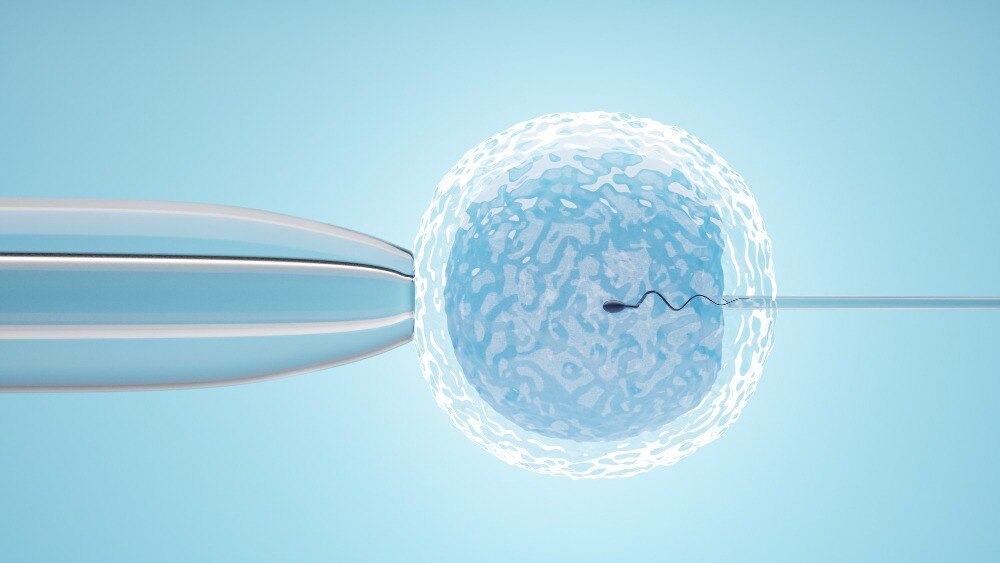
| ICSI | One sperm is injected into one egg | Significant sperm impairment or previous poor fertilisation; routine use has not shown a live-birth advantage for everyone |
| Fresh transfer | An embryo is transferred in the retrieval cycle | Avoids a later transfer cycle, but ovarian stimulation and uterine preparation occur together |
| Frozen transfer | An embryo is stored and transferred later | Separates lining preparation from retrieval and can reduce ovarian hyperstimulation risk; requires extra scheduling and another cycle |
| Donor eggs or sperm | Reproductive material comes from a screened donor | Relevant when egg or sperm factors make using your own gametes unsuitable or unlikely to work |
| PGT-A | Embryos are screened for chromosome-number differences | Selected cases only; it is not a guarantee of a healthy child and can leave fewer embryos for transfer |
A clinic may freeze all embryos if the lining is unsuitable, hormone levels are concerning or hyperstimulation risk is high. Fresh and frozen strategies have different pregnancy-complication patterns, including hypertensive-disorder risk, so neither is automatically best.
Transfer one embryo at a time when appropriate. This reduces twin and higher-order pregnancy risks, including preterm birth, low birth weight and maternal complications.
What happens during an IVF cycle, and how much time does it require?
One IVF cycle usually takes about two to six weeks from starting stimulation to the pregnancy test, with extra time for a frozen transfer. The process behind IVF options for infertility and natural pregnancy is planned around your results, not a fixed calendar.
1. At consultation, both partners are assessed. Testing may include ovarian-reserve tests, ovulation assessment, semen analysis, and uterine or tubal evaluation. The plan sets medication doses, monitoring dates and whether transfer will be fresh or frozen.
2. You learn to give daily gonadotropin injections, then attend repeated ultrasound scans and blood tests. These checks track follicle growth and hormone levels; too few developing eggs can lead to cancellation.
3. When follicles are ready, a trigger injection schedules egg retrieval. Arrange transport and rest afterward because sedation and pelvic discomfort make driving unsafe. Eggs and sperm are then used for fertilisation, and embryos are cultured for several days.
4. A suitable embryo may be transferred fresh, or frozen for a later cycle if the lining is unsuitable, embryo development needs review or a freeze-all plan is safer. Poor fertilisation or embryos that stop developing can prevent transfer.
5. Progesterone supports the uterine lining until testing, usually about two weeks after transfer. Do not judge success from cramps, discharge or other early symptoms. A positive test confirms pregnancy hormone, not an ongoing pregnancy; ultrasound follow-up confirms location and development.
OHSS risk falls with personalised gonadotropin dosing, GnRH-antagonist protocols, an appropriate GnRH-agonist trigger and freezing embryos when indicated. Severe swelling, breathlessness or reduced urination needs urgent care.
How likely is pregnancy, and can natural pregnancy happen after IVF?
Pregnancy after IVF is possible, but IVF benefits for infertility have limits: it bypasses or assists specific barriers without guaranteeing implantation, pregnancy or live birth. Judge results by live birth, not a positive test alone. Compare the figures this way:
| Measure | What it tells you | What to ask |
|---|---|---|
| Positive pregnancy rate | Tests that detected pregnancy | How many ended in live birth? |
| Age-specific live-birth rate | Live births per treatment attempt for an age group | What is the rate for your age and donor-egg status? |
| Cumulative live-birth rate | Live births across linked fresh or frozen transfers from one retrieval | Does it include every embryo and all follow-up transfers? |
Your estimate also depends on ovarian reserve, egg numbers, sperm and uterine factors, embryo development, and donor-egg use. AMH and antral follicle count mainly estimate ovarian response and the likely number of eggs retrieved; they do not measure egg quality or guarantee success.
Age remains important because embryo chromosome errors increase with age and affect live birth. PGT-A screens embryos for aneuploidy; it is not a guarantee of a healthy child or a universal add-on.
Natural pregnancy after IVF can occur after an unsuccessful cycle or an IVF birth. The likelihood depends on the original cause, age, fallopian tubes, sperm factors and contraception; a later conception does not prove the diagnosis was wrong.
After a positive test, seek urgent assessment for:
- Severe one-sided pain
- Shoulder-tip pain
- Fainting
- Heavy bleeding
These symptoms can signal ectopic or heterotopic pregnancy.
How should you compare IVF care and clinics before deciding?
A clinic’s highest advertised pregnancy percentage is not enough for choosing IVF treatment. For IVF treatment in Mumbai, ask whether both the clinic and laboratory are registered under India’s Assisted Reproductive Technology (Regulation) Act, 2021 and applicable rules. Registration confirms a legal requirement, not superior outcomes.
Request written answers to these questions:
- Are live-birth or cumulative-live-birth results separated by age and donor status?
- What laboratory quality controls, equipment-maintenance records and embryo-tracking procedures are used?
- Does the clinic recommend transferring one embryo at a time?
- What are its rates of ovarian hyperstimulation syndrome, infection, bleeding, cancelled cycles and hospital admission?
- When does it cancel stimulation or defer transfer, and what refund applies?
- Does the quoted fee include monitoring, medicines, egg retrieval, fertilisation, embryo culture, storage, testing and later frozen-embryo transfers?
| Option | What to compare | Question to ask |
|---|---|---|
| Conventional IVF | Eggs and sperm placed together | Is ICSI unnecessary without significant sperm impairment or previous poor fertilisation? |
| ICSI | One sperm injected into an egg | What specific finding justifies the added procedure? |
| Fresh transfer | Transfer in the retrieval cycle | Is the uterine lining suitable and is ovarian hyperstimulation risk acceptable? |
| Frozen transfer | Transfer after separate lining preparation | What extra cycle, storage and transfer costs apply? |
| PGT-A | Embryo chromosome screening | Could testing reduce transferable embryos, and what benefit is expected for you? |
An individualised consultation with Dr Bhavini Shah Balakrishnan can interpret ovarian reserve, semen findings, tubal and uterine factors, treatment history and reproductive goals. That discussion can prevent unnecessary ICSI or PGT-A while identifying when delaying IVF risks losing time-sensitive options.
Related services
IVF TREATMENT IVF (In Vitro Fertilization) is a form of assisted reproductive technology (ART) that involves combining eggs and sperm outside the body in a... View service → |
IUI Treatment IUI (Intrauterine Insemination) is a fertility treatment that involves placing sperm directly into a woman's uterus to increase the chances of... View service → |
Frequently asked questions
When does IVF make sense instead of continuing to try naturally?
IVF makes sense when less intensive options do not address the findings, when time is important, or when factors such as blocked fallopian tubes or severe sperm problems reduce the value of continued attempts.
Which IVF option fits different medical findings and treatment goals?
The choice depends on ovulation, ovarian reserve, sperm findings, fallopian-tube status, previous treatment and goals such as preserving fertility or limiting the risk of passing on a genetic condition.
What happens during an IVF cycle, and how much time does it require?
An IVF cycle includes ovarian stimulation, monitoring, egg retrieval, sperm collection, fertilisation in the laboratory, embryo development and embryo transfer or freezing. The exact schedule depends on the protocol and clinic appointments.
Can natural pregnancy happen after IVF?
Yes, natural pregnancy after IVF is possible when ovulation, sperm function and fallopian-tube access support conception. Ask your fertility specialist whether your underlying findings make it realistic.
How should you compare IVF care and clinics before deciding?
Compare the proposed treatment plan, laboratory procedures, monitoring, embryo-transfer policy, total itemised costs, waiting times, communication arrangements and how the clinic handles complications.
Related service
ICSI Treatment ICSI (Intracytoplasmic Sperm Injection) is a form of assisted reproductive technology (ART) used in cases of male infertility. View service → |
Keywords