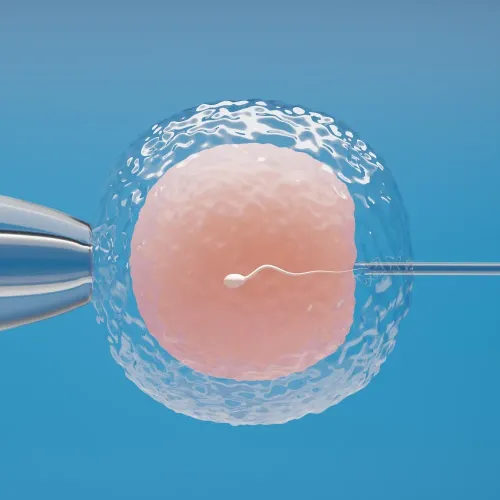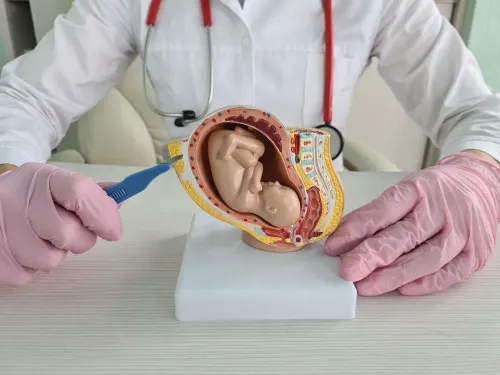

IUI can improve the chance that prepared sperm reaches an egg, but it cannot overcome every cause of infertility and it does not guarantee fertilization or implantation. By understanding the medical work-up, cycle monitoring, practical demands, risks and alternatives, you can judge whether IUI is a sensible next step for your circumstances.
Key takeaways
- IUI needs at least one open, functioning fallopian tube and timed ovulation.
- Monitoring uses ultrasound and sometimes hormone tests to time insemination.
- Prepared sperm is placed through the cervix; fertilisation still occurs inside the body.
- Compare IUI with IVF based on diagnosis, age, time, cost and previous treatment response.
Who is IUI most likely to help?
IUI is most reasonable when sperm can reach at least one functioning fallopian tube, ovulation can be timed, and the fertility barrier is limited. It places prepared sperm beyond the cervix, but fertilisation still happens inside the body; it is not IVF.
| Problem | Why IUI may help | What doctors check |
|---|---|---|
| Unexplained infertility | Oral ovulation medication plus IUI is commonly tried before IVF | Age, ovarian reserve, ovulation and tubal patency |
| Ovulation problems | Medication can help release an egg, while IUI places sperm at the fertile time | Ovulation response, follicle growth and the risk of multiple pregnancy |
| Cervical-factor infertility | IUI bypasses cervical mucus that blocks sperm movement | At least one open tube and a semen analysis |
| Mild male-factor infertility | Prepared sperm can improve the number reaching the tube | Sperm count, movement and shape |
| Donor sperm or difficulty having vaginal intercourse | IUI provides a controlled route for sperm placement | Donor screening, ovulation and tubal function |
Before starting, ask how IUI eligibility applies to your age, ovarian reserve and diagnosis. Doctors commonly assess ovarian reserve with AMH and antral follicle count, confirm ovulation with cycle tracking or ultrasound, and test semen. They check the tubes with an HSG or HyCoSy; both blocked tubes make IUI unlikely to work.
Advanced reproductive age, markedly reduced ovarian reserve, severe endometriosis and severe male-factor infertility can make IVF, sometimes with ICSI, a better option. Gonadotropin-only IUI is generally avoided because it raises the chance of multiple pregnancy.
How is an IUI cycle planned and monitored?
A natural-cycle IUI uses your own ovulation when cycles are regular and testing shows a usable follicle. Doctors choose medication when ovulation is irregular, absent, or when oral stimulation could improve the chance of conception. Age, ovarian reserve, sperm results, previous treatment response, and multiple pregnancy precautions also shape the plan.
| Option | How it is used | Main trade-off |
|---|---|---|
| Natural-cycle IUI | Track the developing follicle and inseminate around spontaneous ovulation | Lower medication burden and multiple-pregnancy risk, but only one opportunity that cycle |
| Letrozole or clomiphene | Encourage one or more follicles to develop | Requires monitoring; twins are more likely than with an unstimulated cycle |
| Gonadotropins | Injectable stimulation to recruit follicles | More monitoring and a substantially higher risk of twins or higher-order multiples |
Ultrasound follicle monitoring usually begins early in the cycle and is repeated until a follicle reaches a suitable size. Blood tests for estradiol may add information, but ultrasound guides most timing decisions.
An hCG trigger can prompt ovulation when the follicle is mature; insemination follows on the clinic’s planned schedule, often 24 to 36 hours later.
A clinic may cancel if no mature follicle develops, a persistent ovarian cyst appears, or too many mature follicles grow. Cancellation thresholds vary by age and protocol, but avoiding triplets and higher-order multiples is the priority. Injectable gonadotropins also carry a risk of ovarian hyperstimulation syndrome, so symptoms and follicle numbers matter before proceeding.
What happens from sperm collection to insemination?
Your partner follows the clinic’s sperm abstinence instructions before the appointment. On the day, semen collection takes place in a private room, usually by masturbation into a sterile container; tell the clinic beforehand if collection may be difficult.
- The laboratory performs sperm washing, removing seminal plasma and concentrating the moving sperm. Ask for the post-wash motile sperm count, which is more useful than semen volume alone when discussing whether IUI remains worthwhile. Very low counts can reduce the chance of success, but no single cutoff fits every laboratory or patient.
- You lie on an examination bed while a speculum gently opens the vagina. The clinician guides a thin catheter through the cervix and releases the prepared sperm into the uterus. The insemination itself usually takes only a few minutes and does not retrieve or fertilize an egg.
- Mild IUI cramping or light spotting can occur afterward. You can usually leave soon after the procedure and return to ordinary activities unless your clinic gives different instructions.
Severe pain, heavy bleeding, fever or fainting is not a routine response; contact the clinic promptly if any occurs. Take a pregnancy test about two weeks after insemination. Testing earlier can give a false positive after an hCG trigger injection, while an early negative may come before your period is due.
What are the chances, risks and next steps after IUI?
An IUI success rate per cycle is usually about 10–15%, not a guarantee for the entire treatment course. Check what a clinic counts: inseminations, ovulatory cycles or confirmed pregnancies produce different percentages, and age, sperm quality and ovulation affect your individual result.
The two-week wait ends about 14 days after insemination. Testing earlier can cause an hCG trigger false positive because the injection contains hCG; a negative result before your expected period can also be too early.
- Use a urine pregnancy test on or after the advised test date, following the timing instructions exactly.
- Ask for a blood pregnancy test if the result is unclear, your period has not started, or your clinic requests quantitative hCG monitoring.
- Contact your clinic urgently for severe abdominal swelling or pain, vomiting, breathlessness, faintness or rapid weight gain. These symptoms can indicate ovarian hyperstimulation syndrome.
- Seek medical advice for heavy bleeding, fever, worsening pelvic pain or unusual discharge. Infection and bleeding are uncommon after IUI, but they need assessment.
The main serious risk of stimulated IUI is multiple pregnancy. Twins or higher-order multiples increase the chance of preterm birth and pregnancy complications, so a cycle can be cancelled when too many mature follicles develop.
For unexplained infertility, three or four cycles using oral medication plus IUI are commonly considered before IVF, based on ASRM guidance. Your doctor may recommend fewer cycles when age, ovarian reserve or test results make IVF more time-sensitive.
How should you compare IUI with other options and choose a plan?
Choose IUI when sperm delivery, the cervix, or mild sperm abnormalities are the main obstacle and at least one fallopian tube is open. It is less useful when egg supply, egg quality, or tubal function is the limiting factor.
| Option | Prefer IUI when | Prefer the alternative when |
|---|---|---|
| IUI vs timed intercourse | Intercourse is difficult, donor sperm is needed, or unexplained infertility persists | Ovulation and semen results are reassuring and intercourse is feasible |
| IUI vs ovulation induction | Medication alone has not worked, or mild male-factor infertility reduces the sperm reaching the tube | Sperm and intercourse are adequate, making insemination unlikely to add value |
| IUI vs IVF | You have unexplained infertility or mild male-factor infertility and want a less complex step first | Both tubes are blocked, or there is severe male-factor infertility, severe endometriosis, or markedly diminished ovarian reserve |
Advanced reproductive age can also justify moving to IVF sooner because IUI cannot correct reduced egg quality. Severe male-factor infertility may require IVF with ICSI rather than repeated insemination.
Before committing, ask these clinic questions:
- What did my tubal test show, and is at least one tube functioning?
- What post-wash total motile sperm count is expected?
- How many IUI cycles will we try before changing treatment?
- What medication, monitoring, cancellation, and multiple-pregnancy policies apply?
- What is included in the IUI cost, including scans, medicines, sperm processing, and pregnancy testing?
Dr Bhavini Shah Balakrishnan can help compare these results and priorities during a Mumbai fertility clinic consultation.
Related service
IUI Treatment IUI (Intrauterine Insemination) is a fertility treatment that involves placing sperm directly into a woman's uterus to increase the chances of... View service → |
Frequently asked questions
Who is IUI most likely to help?
IUI is most suitable when at least one fallopian tube functions, ovulation can be timed and the fertility barrier is limited. It can be considered for unexplained infertility, ovulation problems after treatment, cervical factors and some sperm-related problems.
How is an IUI cycle planned and monitored?
The cycle is planned around ovulation. Your clinician may use ultrasound scans and hormone tests to track follicle growth and may prescribe ovulation medication. Insemination is timed around ovulation or an ovulation trigger.
What happens from sperm collection to insemination?
A semen sample is collected and processed in the laboratory to concentrate motile sperm and remove seminal fluid. The prepared sample is placed through the cervix into the uterus using a thin catheter.
What are the chances and risks after IUI?
IUI success depends on age, the cause of infertility, egg reserve, ovulation and sperm quality. Possible risks include discomfort, infection and multiple pregnancy, especially when ovulation medicines stimulate more than one follicle. Your clinician will explain when to take a pregnancy test and what to do after a negative result.
How should you compare IUI with IVF?
Compare the treatments using your diagnosis, age, fallopian-tube status, sperm quality, treatment time, cost, emotional demands and previous response. IVF may be more appropriate when both tubes are blocked, sperm factors are severe or several IUI cycles have not worked.