Choosing laparoscopy depends on the condition being treated, the size and location of the disease, your fertility plans, and whether an open operation would offer better control. You will learn which gynaecological problems may suit laparoscopy, what the operation involves, what recovery can realistically look like, and which questions to ask before consenting.
Key takeaways
- Laparoscopy may help diagnose or treat endometriosis, cysts, fibroids and pelvic pain.
- Your surgeon uses imaging, symptoms, fertility plans and cancer concerns to assess suitability.
- Recovery is usually shorter than open abdominal surgery, but operative procedures need more time.
- Discuss ovarian reserve, adhesions, recurrence and fertility effects before surgery.
Which gynaecological conditions may benefit from laparoscopy?
Laparoscopy is suitable when imaging, symptoms and fertility plans suggest that seeing or treating pelvic disease will change management. The expected benefit depends on the diagnosis, ovarian reserve, disease extent, previous operations and concern about cancer.
| Condition | When laparoscopy may help | Important limitation |
|---|---|---|
| Endometriosis | Laparoscopy for endometriosis can remove visible lesions and assess their location. | Surgery is not automatically best for pain or infertility; consider age, symptoms, ovarian reserve, previous surgery and other fertility treatments. |
| Ectopic pregnancy | Laparoscopy for ectopic pregnancy can remove a tubal pregnancy in a stable patient suitable for surgery. | Salpingectomy or salpingotomy depends on the opposite tube, affected tube and future fertility plans. |
| Infertility or adhesions | Infertility laparoscopy can inspect the pelvis when ultrasound or tubal testing leaves an important unanswered question. Pelvic adhesions treatment can restore anatomy in selected cases. | Semen analysis, ultrasound, tubal testing or assisted reproduction may answer the question more effectively, and adhesions can return. |
| Fibroids or ovarian cysts | Laparoscopy may remove selected fibroids or cysts. | Cyst removal is appropriate only when imaging and assessment do not suggest malignancy. |
| Unexplained pelvic pain | It can identify and treat visible endometriosis, adhesions or other pelvic disease. | Normal findings do not explain every pain syndrome. |
Laparoscopy identifies and treats visible disease, but it does not guarantee pain relief or pregnancy. If cancer is possible, or disease is extensive, open surgery and specialist cancer planning may be safer than minimally invasive removal.
What happens before and during laparoscopic gynaec surgery?
Before booking surgery, review the ultrasound or MRI findings, blood-test results, medicines, allergies and previous operations with your surgeon. Preoperative tests for laparoscopy may also include a pregnancy test when relevant.
Discuss fasting times, consent for the planned procedure and possible conversion to open surgery, and your fertility goals before surgery involving the tubes, ovaries, fibroids or endometriosis.
The laparoscopy procedure steps usually follow this sequence:
- You receive general anaesthesia laparoscopy, so you remain unconscious and pain-free during the operation.
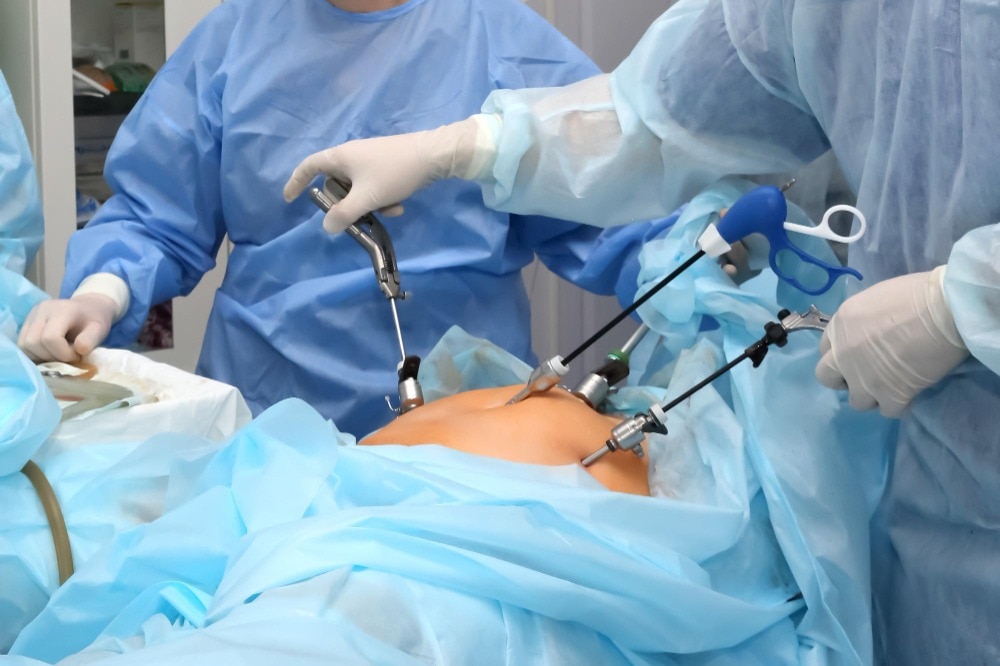
- The surgeon makes several abdominal incisions, commonly about 0.5 to 1 centimetre long. Carbon dioxide insufflation inflates the abdomen, creating space between the abdominal wall and pelvic organs.
- A camera enters through one port, while long surgical instruments enter through others. The surgeon may inspect the pelvis, divide adhesions, remove endometriosis, repair or remove a tube, or remove an ovarian cyst or fibroid.
- A specimen may leave through a port inside a retrieval bag. Controlled fragmentation is used only when appropriate; suspected cancer changes this decision because spillage or incomplete staging can affect treatment.
- If cancer is possible, you may need an open route, a gynaecological oncologist and a specialist cancer team rather than routine minimally invasive surgery.
Uncontrolled bleeding, dense adhesions, poor visibility, extensive disease or organ injury can also require conversion to open surgery. That is a safety decision, not proof that the original plan was wrong.
What are the benefits compared with open abdominal surgery?
Compared with laparotomy, laparoscopy uses smaller incisions and causes less disruption to the abdominal wall. That usually means less postoperative pain, smaller scars, earlier mobility, a shorter hospital stay and a faster return to normal activities.
| Approach | Main advantage | Important limitation |
|---|---|---|
| Laparoscopy | Avoids the large abdominal wound and often speeds recovery | Operating time and urinary-tract injury risk can exceed vaginal surgery |
| Vaginal hysterectomy | Often the preferred route when feasible, with no abdominal incision | Unsuitable when pelvic access or additional treatment is needed |
| Abdominal hysterectomy | Provides wide access for some large or complex operations | Larger wound, more pain and slower recovery |
These are comparative benefits, not a promise of an easy recovery. Extensive endometriosis, a large fibroid or cyst, dense adhesions, prolonged operating time or substantial blood loss can make laparoscopic recovery demanding. The laparoscopic hysterectomy benefits are strongest when the uterus and surrounding disease can be treated safely through the planned ports.
The surgeon may convert laparoscopy to open surgery because of:
- Uncontrolled bleeding
- Poor visibility
- Dense adhesions or extensive disease
- Injury to an organ
- Suspected cancer requiring a different operation or specialist team
Conversion is a safety decision, not evidence of failed planning. Protecting you takes priority over preserving the original route.
What is recovery like after diagnostic and operative laparoscopy?
Laparoscopy recovery time depends more on what was done than on the size of the incisions. A diagnostic laparoscopy or short procedure may allow same-day laparoscopy and discharge after you are alert, drinking, passing urine, and have pain and nausea under control.
1. The first night: Extensive endometriosis excision, myomectomy, adhesiolysis, or ovarian cystectomy may require overnight observation. Operating time, blood loss, nausea, difficult pain control, coexisting illness, or a complication can extend the stay.
2. The first several days: Carbon dioxide used during surgery can cause upper-abdominal discomfort or shoulder-tip pain after laparoscopy. This is usually referred pain from gas irritation, not a shoulder injury. Take prescribed pain relief as directed and walk gently to reduce stiffness.
3. Incision care: Keep dressings clean and dry, and replace them only as instructed. Shower or bathe according to your surgeon’s advice; avoid soaking in a bath or swimming until the incisions have healed or you have been cleared.
4. Returning to activities: Driving after laparoscopy should wait until you can perform an emergency stop without pain and are not affected by sedating medicines. Desk work, exercise, lifting, and sexual activity depend on the operation and your surgeon’s instructions; diagnostic surgery usually permits an earlier return than myomectomy or complex endometriosis surgery.
5. Seek medical advice for fever, worsening abdominal pain, heavy bleeding, repeated vomiting, breathlessness, or redness, swelling, and discharge from an incision. Follow-up checks healing and reviews pathology results.
What risks and fertility trade-offs should you discuss before choosing laparoscopy?
Consent should follow an individual discussion of laparoscopy risks, not a general promise that keyhole surgery is always safer or faster. Recognised complications include:
| Risk or trade-off | What it can mean | Ask before consenting |
|---|---|---|
| Bleeding, infection, anaesthesia problems or blood clots | Medication, monitoring, further treatment or another procedure may be needed | What is my risk based on my health and operation? |
| Carbon-dioxide complications or port-site hernia | Gas-related problems or a weakness at an incision can occur | How will these risks be prevented and treated? |
| Organ injury | Instruments can injure the bowel, bladder, ureters, blood vessels, tubes, ovaries or uterus | Which structures are close to the disease? |
| Conversion to open surgery | Poor visibility, dense adhesions, extensive disease, uncontrolled bleeding, organ injury or suspected cancer can require conversion to open surgery | What would trigger this decision? |
Removing an ovarian endometrioma can reduce ovarian reserve after endometrioma surgery, especially when cysts are bilateral, recurrent or treated on both ovaries. The possible fertility benefit of removing the cyst must be weighed against loss of ovarian tissue.
Laparoscopy fertility considerations also include adhesiolysis: freeing adhesions does not prevent new adhesions, and endometriosis can recur. Surgery may not resolve pain or infertility.
Ask:
- What does my imaging show, and what is the operation intended to achieve?
- How could it affect fertility, ovarian reserve or future treatment?
- What happens if extensive disease or cancer is found?
- What restrictions will apply during recovery?
Dr Bhavini Shah Balakrishnan can connect these surgical decisions with gynaecological assessment, fertility planning, ultrasound findings and conception goals.
Related service
Laparoscopy Treatment Laparoscopy is a minimally invasive surgical procedure that uses a thin, lighted tube with a camera (laparoscope) to examine the inside of the... View service → |
Frequently asked questions
Which gynaecological conditions may benefit from laparoscopy?
Laparoscopy may help investigate or treat endometriosis, ovarian cysts, fibroids, pelvic pain, adhesions and some causes of infertility. Suitability depends on your symptoms, imaging, disease extent and fertility plans.
What happens before and during laparoscopic gynaec surgery?
Before surgery, your gynaecologist reviews your medical history, scans, medicines, fertility goals and anaesthetic needs. During the procedure, a camera enters through a small abdominal incision, with additional instruments used when treatment is required.
What are the benefits compared with open abdominal surgery?
Compared with open surgery, laparoscopy usually involves smaller incisions, less abdominal-wall trauma and a shorter recovery. The benefit depends on the operation, disease severity and your previous surgeries.
What is recovery like after diagnostic and operative laparoscopy?
Diagnostic laparoscopy often has a simpler recovery than operative laparoscopy. Recovery time depends on what your surgeon finds and treats, so ask when you can work, exercise, drive and resume sexual activity.
What risks and fertility trade-offs should you discuss before choosing laparoscopy?
Discuss bleeding, infection, injury to nearby organs, anaesthetic risks, adhesions, conversion to open surgery and recurrence. Ask how treating ovarian disease could affect ovarian reserve and future fertility.