
An ovarian cyst does not automatically prevent pregnancy, but its size, appearance, cause, symptoms, and effect on ovarian tissue can change your preconception plan. By reviewing those factors, you can understand when observation is sensible, when treatment may protect fertility, and what to assess before surgery or fertility treatment.
Key takeaways
- An ovarian cyst does not automatically reduce your ability to conceive.
- Ultrasound helps identify a cyst’s size, location, appearance and likely cause.
- Many functional cysts need monitoring rather than immediate surgery.
- Ask how treatment could affect ovarian tissue before choosing surgery.
How ovarian cyst care can support your pregnancy plan
An ovarian cyst does not automatically reduce your ability to conceive. The effect on ovarian cyst and fertility depends on its cause, size, symptoms, location and persistence—not simply its presence.
A fertility-focused assessment can support your pregnancy plan by:
- Confirming whether the cyst is likely to resolve on its own, so you avoid unnecessary treatment or delays.
- Identifying endometriosis, pelvic adhesions or another condition that could affect ovulation, egg transport or implantation.
- Relieving significant pain and addressing complications such as twisting or rupture before pregnancy.
- Showing how much healthy ovarian tissue remains when treatment is being considered.
Understanding ovulation and ovarian cysts also prevents a common mistake: combined hormonal contraceptives can reduce new ovulation-related functional cysts, but they do not reliably clear an existing cyst faster. They are not a fertility treatment when your immediate goal is conception.
Surgery can be useful when a cyst causes severe symptoms, has concerning features or interferes with fertility treatment. However, removing an endometrioma can lower anti-Müllerian hormone (AMH), especially after surgery on both ovaries or repeat operations.
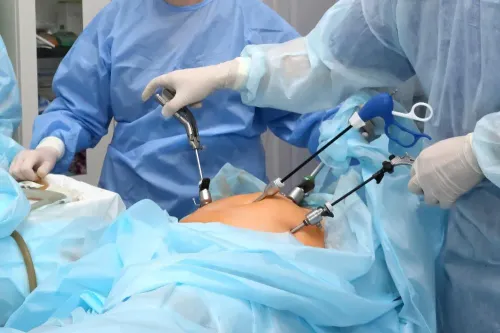
If surgery is needed while planning pregnancy with an ovarian cyst, discuss ovarian-sparing techniques, antral follicle count, AMH and whether expedited conception or fertility preservation makes sense. Laparoscopic cystectomy often shortens recovery compared with open surgery, but it can still remove healthy tissue or cause adhesions.
What an ultrasound reveals about the right next step
A pregnancy test and transvaginal ultrasound, when appropriate, establish whether a mass is fluid-filled, mixed, or solid. A simple ovarian cyst with thin walls, no internal nodules, and no concerning blood flow is commonly monitored, especially when symptoms are mild and the cyst is small.
Cyst size matters, but size alone does not determine cancer risk or the need for surgery.
| Finding | Usual next step | Why it matters |
|---|---|---|
| Simple ovarian cyst | Monitor or repeat ultrasound | Functional follicular and corpus-luteum cysts often disappear over several menstrual cycles. Persistence, enlargement, or symptoms change the plan. |
| Complex ovarian cyst | Reassess and arrange gynecologic review | Internal echoes, an endometrioma pattern, or a dermoid pattern needs follow-up rather than assuming the mass is harmless. |
| Solid areas and septations in ovarian cysts | Investigate more closely | Thick septations, papillary projections, solid components, or abnormal Doppler blood flow raise concern and may require specialist imaging or surgical planning. |
| Large, bilateral, or persistent mass | Prompt specialist assessment | Growth, ascites, significant pain, or involvement of both ovaries adds concern; cyst size must be interpreted with the entire scan. |
A repeat scan shows the direction of change: resolution supports observation, while growth or persistence supports further evaluation. Ultrasound cannot always distinguish benign from malignant disease, so seek review for a complex, enlarging, or painful mass rather than self-treating.
Which cysts are watched, and how they differ from PCOS
A simple, stable cyst can be watched when you have no severe symptoms and ultrasound shows no solid areas, suspicious blood flow, or concerning change. Many functional cysts, including follicular cysts and a corpus luteum cyst, disappear within several menstrual cycles, so repeat ultrasound and symptom tracking often replace immediate surgery.
| Cyst type | What observation means | Why the plan may change |
|---|---|---|
| Functional cyst | Repeat ultrasound after the clinician’s recommended interval | Persistence, growth, pain, or complex features need reassessment |
| Corpus luteum cyst | Monitor this ovulation-related cyst if its appearance is typical | Severe pain, bleeding, or suspected rupture needs urgent evaluation |
| Dermoid cyst | Observe a small, stable, symptom-free mature cystic teratoma | Growth, torsion risk, rupture, symptoms, or uncertain diagnosis may favour surgery |
| Endometrioma | Monitor when appropriate while assessing pain, ovarian reserve, and fertility goals | Endometriosis, infertility, large size, or planned assisted reproduction can alter the decision |
| Cystadenoma | Follow a benign-appearing lesion for change over time | Growth or solid or complex features may require closer investigation |
An ovarian cyst is not the same diagnosis as polycystic ovary syndrome. PCOS requires a combination of ovulatory dysfunction, clinical or biochemical hyperandrogenism, and polycystic ovarian morphology, after other causes are excluded. One cyst—or ovaries that look “polycystic” on ultrasound alone—does not establish PCOS or predict inability to conceive.
The endometriosis care connection also matters: an endometrioma points toward endometriosis, which can affect fertility independently of the cyst itself.
Monitoring versus surgery when you want to conceive
Observation is usually preferable when ultrasound shows a benign-appearing cyst, symptoms are manageable, and there is no urgent concern. A repeat ultrasound for an ovarian cyst tracks whether it resolves, while cyst growth and persistence can shift the balance toward treatment.
| Option | Potential benefit | Fertility trade-off | When it fits |
|---|---|---|---|
| Observation | Avoids surgery, ovarian injury, and adhesions | Requires follow-up and may delay treatment if the cyst persists | Simple or functional cyst with reassuring features and mild symptoms |
| Surgery | Treats complications, relieves significant pain, or provides tissue for diagnosis | Ovarian cyst removal and ovarian reserve must be weighed together; normal tissue can be lost | Suspicious, enlarging, persistent, large, or symptomatic cyst, or suspected torsion |
An endometrioma does not automatically require surgery before conception. Consider pain, age, cyst characteristics, previous operations, whether one or both ovaries are affected, and whether assisted reproduction is planned. Bilateral or repeat surgery carries greater risk of reducing ovarian reserve.
AMH and antral follicle count can provide a fertility baseline when surgery is being considered, but neither test perfectly predicts natural conception. Ask whether laparoscopic, ovarian-sparing surgery is appropriate, and discuss adhesions, recovery time, expedited conception, or fertility preservation before operating.
A fertility specialist can help compare the risk of waiting with the risk of removing ovarian tissue.
A fertility-focused cyst care plan before conception
For fertility planning with ovarian cyst, ask how the finding changes three choices: trying naturally, starting fertility treatment, or having surgery. Bring your menstrual and ovulation history, pain pattern, previous pelvic surgery, and ultrasound reports. An ovarian cyst alone does not prove infertility; endometriosis, blocked tubes, PCOS, and reduced ovarian reserve may matter more.
Discuss these questions with your clinician:
- Does the cyst look functional, an endometrioma, dermoid, or another mass, and when should ultrasound be repeated?
- What does my fallopian tube anatomy show, and could pelvic disease affect natural conception?
- Will the cyst interfere with ovary access during IVF or follicle collection?
- Should we measure AMH and antral follicle count before surgery or fertility treatment?
- If surgery is needed, can an ovarian-sparing laparoscopic cystectomy avoid unnecessary tissue loss, and should we consider fertility preservation or expedited conception?
| Option | What to discuss | Main trade-off |
|---|---|---|
| Observation | Repeat imaging and a clear trigger for intervention | Preserves ovarian tissue but may delay treatment |
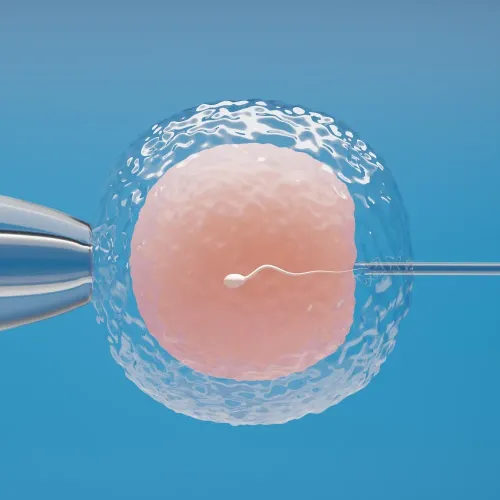
| IVF | Whether an endometrioma blocks follicle access or causes pain | Routine removal does not improve live-birth rates by itself |
| Laparoscopic cystectomy | Ovarian-sparing technique, adhesions, recovery, and reserve | Faster recovery than open surgery, but surgery can reduce reserve |
Combined hormonal contraception can prevent new functional cysts, but it is not a fertility treatment and will not reliably clear an existing cyst. Dr Bhavini Shah Balakrishnan can help align cyst findings, ovarian reserve, tubal anatomy, and your preferred timeline before you commit to treatment.
Related service
MTP Services MTP (Medical Termination of Pregnancy) services refer to the medical procedures and care provided to terminate a pregnancy. View service → |
Frequently asked questions
How can ovarian cyst care support your pregnancy plan?
Care identifies the cyst’s cause, size, location, symptoms and persistence, then matches treatment to your conception plans.
What can an ultrasound reveal about an ovarian cyst?
An ultrasound assesses the cyst’s size, position and appearance, helping your clinician decide between observation, further testing or treatment.
Which ovarian cysts are watched, and how do they differ from PCOS?
Many functional cysts are watched because they resolve over time. PCOS is a hormonal and ovulation-related condition, not simply one ovarian cyst.
When is monitoring preferable to surgery if you want to conceive?
Monitoring is often considered when a cyst is small, uncomplicated and symptom-free. Surgery requires discussion of symptoms, cyst features and possible effects on ovarian tissue.
What should a fertility-focused cyst care plan include before conception?
Your plan should cover follow-up imaging, symptom changes, ovulation goals, treatment timing and how each option could affect fertility.