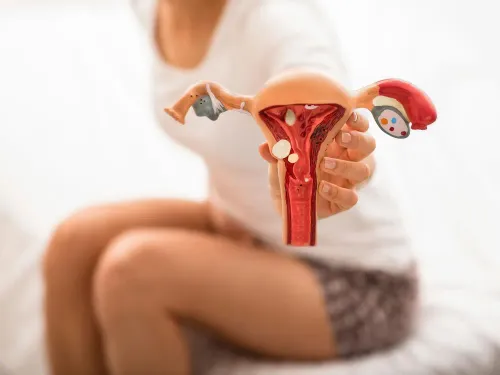

IUI and IVF are both fertility treatments, but they differ substantially in procedure, cost, medication, laboratory involvement, and suitability. Choosing between them should be based on the cause and duration of infertility rather than assuming that one treatment is universally better.
The WHO recommends a progressive, evidence-based approach that considers clinical findings and patient preferences before moving from simpler fertility measures to treatments such as IUI or IVF. Its global infertility guidance also highlights the emotional and financial burden couples may face.
How IUI Works
In intrauterine insemination, a semen sample is processed so concentrated motile sperm can be placed inside the uterus around the time of ovulation. Fertilisation still needs to occur naturally within the fallopian tube.
IUI may be performed during a natural cycle or with ovulation medication. Monitoring helps identify follicle development and reduce avoidable risks.
It may be considered when there is:
- Unexplained infertility
- Ovulation difficulty that responds to treatment
- Mild male-factor infertility
- A cervical factor affecting sperm passage
- A need to use donor sperm
- Difficulty with vaginal intercourse or ejaculation
At least one usable fallopian tube and sufficient motile sperm are usually necessary.
How IVF Works
During in-vitro fertilisation, the ovaries are stimulated to develop multiple follicles. Eggs are retrieved and combined with sperm in a laboratory. An embryo is then transferred into the uterus.
IVF may be considered for:
- Blocked or severely damaged fallopian tubes
- More significant male-factor infertility
- Endometriosis in selected situations
- Reduced time for lower-intensity treatments
- Unsuccessful previous treatment
- Certain genetic testing requirements
- Other complex fertility factors
Intracytoplasmic sperm injection may be used when a single sperm needs to be introduced directly into an egg, but it is not automatically required in every IVF cycle.
Key Differences Couples Should Evaluate
Treatment intensity
IUI is less invasive and usually involves fewer procedures. IVF requires injections, monitoring, egg retrieval, embryology services, and embryo transfer.
Cost
An individual IUI cycle generally costs less than an IVF cycle. However, treatment should not be judged only by the cost of one attempt. The likely chance of benefit, number of appropriate cycles, age, diagnosis, and time already spent trying should all be considered.
Fallopian tubes
IUI depends on the ability of sperm and egg to meet within a tube. IVF bypasses the tubes.
Information gained
IVF provides information about egg retrieval, fertilisation, and embryo development. IUI does not allow these stages to be observed.
Multiple pregnancy risk
Medication used with IUI can cause multiple follicles to develop, increasing the possibility of twins or higher-order pregnancy. IVF can also produce multiple pregnancy when more than one embryo is transferred. Careful monitoring and appropriate embryo-transfer decisions help manage these risks.
Questions to Ask Before Deciding
Couples considering IVF and IUI fertility treatment in Mumbai should ask:
- What diagnosis is the treatment addressing?
- Are the fallopian tubes open?
- What does the semen analysis show?
- How does the woman’s age affect the plan?
- What monitoring is included?
- When would the treatment be cancelled?
- How many attempts would be reasonable?
- What additional costs may arise?
- What are the risks of multiple pregnancy?
- When should the plan be reviewed?
Success rates should be explained according to the couple’s own clinical profile. Broad advertising percentages may not reflect age, diagnosis, embryo stage, or whether the figure refers to a positive test, clinical pregnancy, or live birth.
Dr Bhavini Shah Balakrishnan evaluates reproductive history and investigation results before discussing whether timed conception, IUI, IVF, or another approach is appropriate. For Mumbai couples, a transparent stepwise plan can reduce unnecessary treatment while recognising situations where delaying IVF may reduce valuable reproductive time.
The best option is the one that addresses the diagnosed fertility barrier with proportionate treatment, realistic expectations, and informed consent.
Keywords